
· 2 min read
Trusting God When Fear Comes Knocking: Psalm 56:3
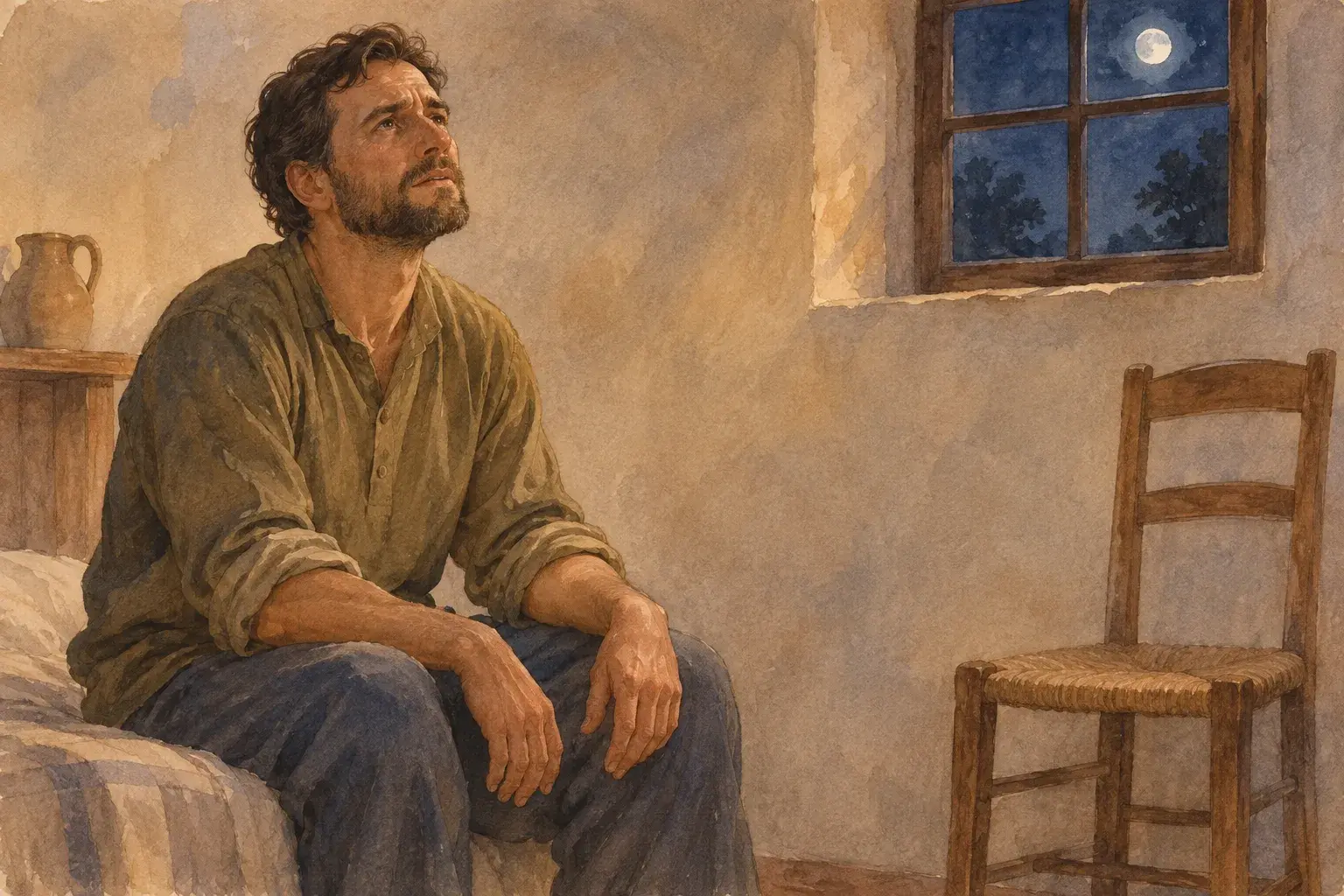
“What time I am afraid, I will trust in thee.”
When Fear Wakes You Up
It's 2 a.m. Your phone lights up with a message you're afraid to open, or your mind starts replaying a conversation from the afternoon. Your heart is racing, and the prayers you try to form feel like they're bouncing off the ceiling. If that's where you are tonight, you're not alone. The psalmist knew that kind of night well.
What the Verse Says
Psalm 56 is attributed to David, and its heading connects it to a dangerous moment when he was seized in the Philistine city of Gath. He wasn't writing from a calm porch. He was writing from a place where his life was at risk. In the middle of that danger, he wrote: "What time I am afraid, I will trust in thee."
Notice what David doesn't say. He doesn't say, "Once I stop being afraid, I will trust God." He admits the fear first, then turns toward God while the fear is still there. Trust isn't the absence of fear. It's what we do with fear. The psalm also keeps going with tears and pleading, which tells us that honest lament belongs in faithful prayer.
This fits a wider pattern in Scripture. Peter later urged believers to bring their worries to God, because God cares for them. The 1 Peter 5:7 reminder is that we can cast our anxieties on Him, since He cares for us. Faith here isn't pretending everything is fine. It's bringing the weight to someone who can carry it.
Trust in Ordinary Life
For most of us, fear doesn't show up as a dramatic threat. It looks like a performance review we're dreading, a family tension that won't resolve, a medical result we're waiting on, or a quiet question about whether we're doing life right. Trusting God in these moments rarely feels triumphant. Sometimes it's a shaky, whispered "I don't know how this turns out, but I'm bringing it to You."
Practically, this might mean naming the specific fear in plain words instead of letting it stay a vague cloud. It might mean praying those words out loud, then taking one small next step, like sending the email or booking the appointment. And it definitely means recognizing that some fears need more than prayer alone. A doctor, counselor, pastor, or trusted friend is part of how God often cares for us. Seeking that help is not a failure of faith. It's wisdom.
Encouragement for the Long Night
If you feel afraid tonight, hear this gently: God is not waiting for you to become fearless before He draws near. He meets you in the fear itself, the same way He met David in a moment of real danger. Your trust may be small, and it may need to be renewed again tomorrow. That's still trust. Take a breath, speak your fear honestly, and let God hold what you can't hold alone.
To reflect on
- What fear has been circling your mind most often lately, and what would it look like to name it honestly before God?
- David admitted his fear before he trusted God. Why do you think naming fear honestly matters for faith?
- Who in your life could you lean on when fear feels too heavy to carry alone?
- What is one small step of trust you could take this week, even if the fear hasn't disappeared yet?
One step today
Write down the one fear keeping you most awake, pray Psalm 56:3 over it in your own words, and send a message today to one trusted person asking them to pray with you.
A prayer
Lord, when fear rises up in me, I want to trust You. You know what keeps me awake and what I cannot control. I bring it to You now, naming it honestly. Be near to me in this moment, steady my heart, and show me the next faithful step. Help me remember that I am not alone, and that You care for me. Amen.
Read alongside
Psalm 34:18 · Isaiah 41:10 · 1 Peter 5:7 · Philippians 4:6-7 · Psalm 46:1